

Duration
The duration of the interview is directly related to the type of the interview, which blocks you used and how many items you added to each block.Available Blocks
- Skills: adds 5 minutes per skill
- Custom Question: adds a maximum of 1-4 minutes per question (depending on what you selected in each question)
- Company Context: adds up to 5 minutes
- Coding Exercise: adds up to 25 minutes
- Custom Exercise: adds up to how many minutes you define during the exercise definition
Interviews can be shorter than the maximum if the candidate answer custom questions or exercise before the maximum time is reach or if they skip making company qustions.
Complexity
The interview can be as complex or as easy as you need it to be. While defining the interview skills and exercises, you can expand the View example questions or the Preview coding exercise boxes located at the right side of the page to understand how Zara is converting your instructions to a possible interview questions.The questions or exercise shown here are just examples. Zara can make different questions or ask for a different exercise to each candidate based on the progress of the interview but maintaining the same characteristics of the examples.
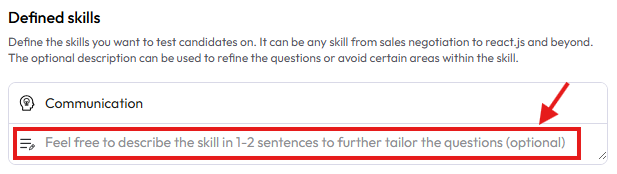
Step 1
The most basic and open type of assessment you can ask Zara to make. Communication (no instructions) Example questions:- Describe a time when you had to explain a complex technical concept to a non-technical stakeholder. How did you ensure they understood?
- What strategies do you use to tailor your communication style when interacting with different audiences within an organization?
- How do you handle situations where there is a miscommunication or misunderstanding among team members during a project?
Step 2
Now let’s add some context to what type of communication you are interested in assessing. Communication Evaluates the capacity of the candidate of converting project stakeholders need to engineers. Example questions:- Can you describe your approach to translating high-level requirements from PMs or business stakeholders into actionable tasks for SEs?
- How do you handle situations where there is ambiguity or misalignment in stakeholder expectations and technical team understanding?
- What strategies do you use to ensure ongoing clarity and alignment between stakeholders and engineers throughout a project lifecycle?
Step 3
Let’s ask Zara to make shorter and more direct questions. Communication Evaluates the capacity of the candidate of converting project stakeholders need to engineers. Make shorter and direct questions. Example questions:- How would you ensure engineers fully understand a PM’s business requirements?
- Describe your approach for clarifying vague stakeholder requests before sharing with SEs.
- What methods do you use to resolve misunderstandings between DS and engineering teams?
Step 4
It could be better for our candidates if we add some examples of communication to each question so they understand what we are talking about. Communication Evaluates the capacity of the candidate of converting project stakeholders need to engineers. Make shorter and direct questions and provide examples of scenarios. Example questions:- How would you communicate a PM’s high-level business requirement, such as ‘increase user engagement’, to your SE team for actionable development tasks?
- Describe a time when a DS provided a complex analysis result—how did you ensure engineers understood and implemented the relevant insights?
- If a stakeholder uses non-technical language to express a need, like ‘I want the app to feel faster,’ what steps would you follow to clarify and translate this into engineering priorities?